With Martyn’s Law now on the statute book, a lot of organisations that run public venues and events are asking a version of the same question: what are we actually expected to do, and what should we put in place to do it? It’s a fair question, and it’s one where a lot of security suppliers are about to start overpromising.
So let’s be clear from the outset. No single product makes a site compliant with Martyn’s Law, and security fog is no exception. What fog can do is something narrower and more honest: it is recognised by the National Protective Security Authority (NPSA) as a sensory Active Delay System in its Marauding Terrorist Attack guidance, which means it has a legitimate place in a wider, risk-assessed protective security plan where a site needs to delay, deny or disrupt hostile movement. This post explains where that line sits, and why fog is worth understanding as part of your preparedness rather than as a box to tick.
What Martyn’s Law Actually Requires
Martyn’s Law is the common name for the Terrorism (Protection of Premises) Act 2025, named in memory of Martyn Hett, one of the 22 people killed in the 2017 Manchester Arena attack. It received Royal Assent on 3 April 2025, with an implementation period of at least 24 months before the duties come into force, giving those responsible for premises and events time to understand and prepare for their obligations.
The Act takes a tiered approach:
- Standard tier covers smaller premises where between 200 and 799 individuals may be present. The focus here is on simple, low-cost procedures: making sure the people working there are better able to reduce harm and save lives if an attack happens.
- Enhanced tier covers larger premises and qualifying events where 800 or more individuals may be present. Here, the responsible person must also consider what public protection measures are appropriate and reasonably practicable to reduce both the risk of physical harm and the vulnerability of the premises or event to an act of terrorism.
The recurring themes across both tiers are procedural: evacuation, invacuation (bringing people inside and holding them somewhere safer), lockdown, and communication. Nothing in the Act mandates any particular product, and that’s an important point to hold onto when suppliers come knocking.
Where the Honest Link to Security Fog Sits
The strongest thing we can say about security fog and Martyn’s Law is not “we make you compliant.” It’s this:
NPSA recognises security fog as a sensory Active Delay System in its Marauding Terrorist Attack guidance.
That recognition matters because it moves fog out of the marketing claims column and into the recognised-measures column. NPSA’s guidance on Active Delay Systems explains that they can slow an attacker’s progress, disrupt an attacker, and help prevent people from inadvertently entering the attack zone. In other words, fog is one recognised way of buying the single most valuable thing during an incident: time.
Our position is deliberately careful, and we’d encourage you to hold suppliers to the same standard:
Not compliance. Capability.
Security fog does not make a site compliant with Martyn’s Law. It is a protective security measure that may form part of a wider strategy where a risk assessment identifies a need to delay, deny or disrupt hostile access to vulnerable areas. Once again, buying security fog is buying time.
How Fog Helps During a Marauding Attack
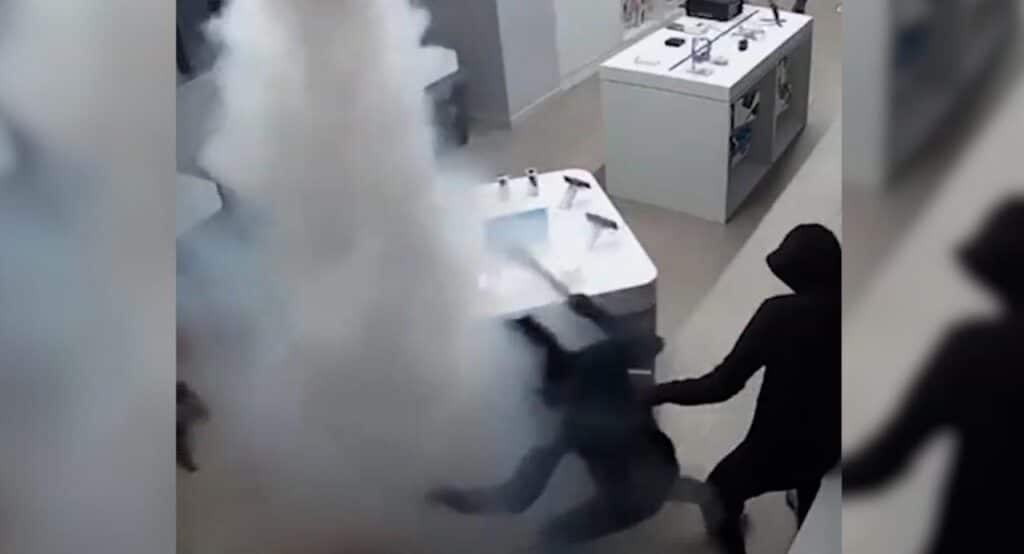
The value of security fog in a hostile-threat context comes down to a simple physical fact: an attacker who cannot see cannot move quickly, cannot navigate confidently, and cannot easily reach the people or areas they’re targeting. A protected space fills with dense, harmless fog within seconds of activation, and that instant loss of visibility does several things at once:
- It delays. Movement through a fogged corridor, lobby or chokepoint becomes slow and uncertain, which buys time for people to move away and for a response to begin.
- It denies access. Fog can help hold an attacker out of a staff-only route, a control room, or an area where vulnerable people are sheltering.
- It disrupts and disorients. The shock of sudden, total obscuration interrupts an attacker’s plan and confidence, which is exactly when a coordinated response has its best chance.
Crucially, a Smoke Screen system is not one-shot. Depending on the configuration and fluid capacity, it can re-fire again and again, so it can keep a route obscured or respond to a changing situation rather than clearing after a single burst. That repeatability is a genuine operational advantage over measures that work only once.
The key discipline, and the thing that separates a serious protective measure from a gimmick, is that fog must be targeted, not blanket. It belongs in controlled areas, not sprayed indiscriminately across every public space.
Where Fog Fits, and Where It Doesn’t
Fog is most relevant in controlled, risk-assessed zones where delaying hostile movement genuinely helps protect people. It should be used cautiously, or not at all, in places where sudden obscuration could cause confusion, crowding or panic, or where emergency services need clear access.
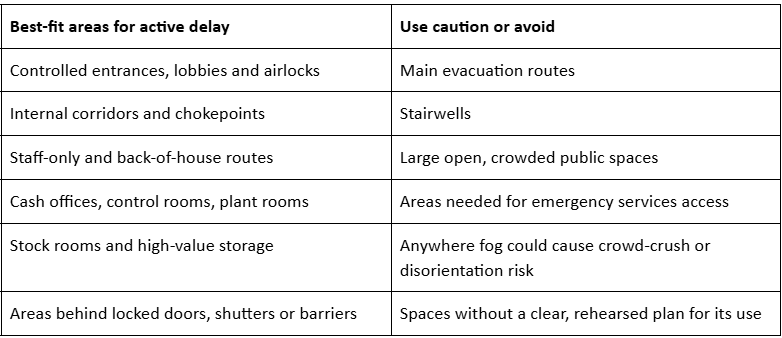
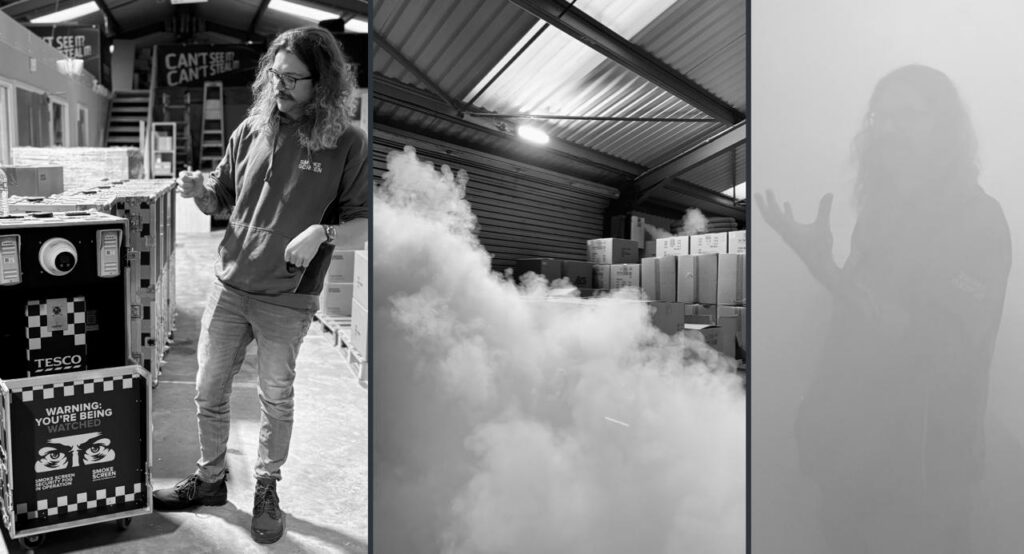
The message to take from that table is threefold: targeted, not blanket; risk-assessed, not assumed; integrated, not standalone. Fog has to work with your evacuation, invacuation, lockdown, fire safety and emergency response procedures, not against them. Designed badly, obscuration in the wrong place could make things worse, which is precisely why it belongs inside a plan rather than bolted on outside one.
Anti-Terrorism Across Different Sectors
The same active-delay principle applies differently depending on the environment, which is why we’ll be looking at specific sectors in this series rather than treating “public premises” as one thing.
- Banks and financial premises. Cash offices, counting rooms and secure back-of-house areas are natural chokepoints where denying and delaying access protects both staff and assets.
- Retail and shopping centres. Stockrooms, loading bays, service corridors and management suites can be protected without fogging the shop floor, keeping the measure targeted where it counts.
- Warehousing and logistics. Large sites with valuable stock and defined access routes lend themselves to active delay at controlled entry points and high-value storage.
In every case, the starting point is the same, and it’s not the product. It’s the risk.
Making the Capability Reliable: Sentience
We think we have the best fog systems in the world, but an Active Delay System only matters if it works the moment it’s needed. That’s the role of Sentience, our monitoring platform. Sentience gives organisations estate-level visibility of fog-system health, faults, activations and readiness. It’s a constant health check for your fog system!
For a multi-site operator, that visibility is the difference between assuming your protective measures are ready and actually knowing it. Sentience helps security, facilities and operations teams see whether systems are online, fault-free and maintained, and it keeps that knowledge in the organisation even as people change roles. In a Martyn’s Law context, being able to demonstrate that your protective measures are managed and ready is part of taking preparedness seriously.
At Smoke Screen we believe that Sentience is one of the key reasons that many of our large partners prefer our services. This is because they know that not only will their fog system work the day it is installed and commissioned, but it will provide data to ensure it is reliability protecting for years to come.
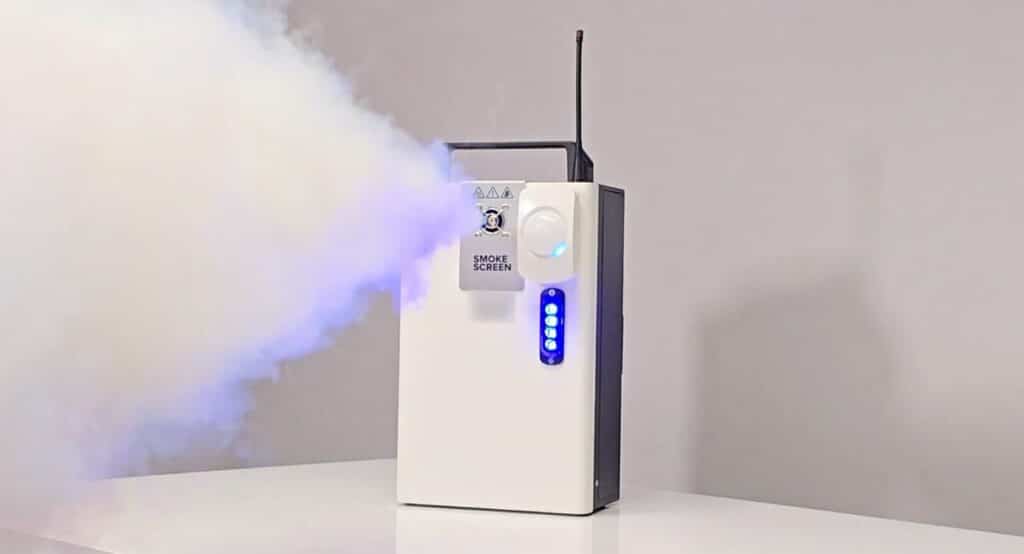
Installed, Deployable, and Monitored
Because risk isn’t static, active delay comes in more than one form:
- Installed systems provide permanent capability for known vulnerable areas: corridors, stock rooms, cash offices, controlled routes and high-value zones.
- Deployable systems provide temporary capability where risk changes quickly, for pop-up locations, events, or sites awaiting permanent works.
- Sentience sits across both, providing the readiness and visibility layer.
The right mix depends entirely on your site, your risk assessment and your operational plan.
The Golden Rule: Start With the Risk, Not the Fog
If there’s one thing to take away, it’s this. The best conversation about Martyn’s Law preparedness doesn’t start with a product. It starts with four questions:
What are you trying to stop happening? Where would it happen? Who needs to be protected? And what should happen in the first 60 seconds?
Answer those honestly, and it becomes clear where active delay helps and where it doesn’t. Security fog isn’t a silver bullet, and anyone selling it as your “Martyn’s Law solution” is overstating it. But as a recognised sensory Active Delay System, deployed in the right places and integrated with a proper plan, it’s a serious, credible measure for buying time and protecting people when it matters most.
Talk to Smoke Screen
If you’re reviewing your preparedness and want to understand where active delay genuinely fits, we can help you think it through, starting with the risk rather than the hardware.
- Book a security assessment
- Ask about active delay in your specific environment
- Speak to us about Sentience and estate-level readiness
Ved Prakash